
For many international property investors, particularly those from highly-regulated and transparent markets like Singapore, the US real estate market seems chaotic. It's a common belief that property investing success relies on timing the market — buying and hoping for appreciation.
This is a speculative path. The strategic path, which we've used to build our 20+ property portfolio, is about forcing appreciation.
This is possible for one simple reason: the US property market is not homogeneous. Unlike in Singapore, where a 3-bedroom unit in one block is priced almost identically to the next, the US market is filled with pricing inefficiencies.
These inefficiencies, driven by millions of individual sellers with unique motivations, create opportunities to buy undervalued deals and "make your money when you buy." This case study breaks down how we used this principle to acquire a property that generated $77,000 in equity (a 35% gain) in under a year, all while collecting positive cash flow.
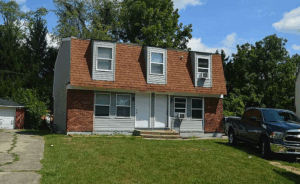 The "comps" (comparable properties) for the exact same model on that street were selling for $299,000.
This specific property, however, was listed at $259,900.
This $40,000 discount wasn't a typo. It was a classic example of a motivated seller — in this case, someone who had bought at a deep discount years ago and was pricing for a quick, uncomplicated sale. In a transparent market, this property would have been listed at $299,000. In the inefficient US market, it was listed based on the seller's personal needs.
Our goal wasn't just to buy an undervalued asset; it was to maximize the opportunity. Through careful due diligence and a strategically structured offer that addressed the seller's desire for a fast, clean close, we were able to negotiate further.
The "comps" (comparable properties) for the exact same model on that street were selling for $299,000.
This specific property, however, was listed at $259,900.
This $40,000 discount wasn't a typo. It was a classic example of a motivated seller — in this case, someone who had bought at a deep discount years ago and was pricing for a quick, uncomplicated sale. In a transparent market, this property would have been listed at $299,000. In the inefficient US market, it was listed based on the seller's personal needs.
Our goal wasn't just to buy an undervalued asset; it was to maximize the opportunity. Through careful due diligence and a strategically structured offer that addressed the seller's desire for a fast, clean close, we were able to negotiate further.
The Strategy: Identify and Act on Market Inefficiency
In November 2024, we identified a duplex with significant, immediate equity potential.
The "comps" (comparable properties) for the exact same model on that street were selling for $299,000.
This specific property, however, was listed at $259,900.
This $40,000 discount wasn't a typo. It was a classic example of a motivated seller — in this case, someone who had bought at a deep discount years ago and was pricing for a quick, uncomplicated sale. In a transparent market, this property would have been listed at $299,000. In the inefficient US market, it was listed based on the seller's personal needs.
Our goal wasn't just to buy an undervalued asset; it was to maximize the opportunity. Through careful due diligence and a strategically structured offer that addressed the seller's desire for a fast, clean close, we were able to negotiate further.
- True Market Value: $299,000
- List Price: $259,900
- Our Final Closing Price: $222,000
The Numbers: Cash Flow & Forced Appreciation
An equity-only deal isn't enough; the property must generate positive cash flow from the start. This asset was a strong performer.1. Cash Flow (The Monthly Win)
Both units were already rented and required no renovations.- Unit 1 (2-bed): $1,050 / month
- Unit 2 (3-bed): $1,100 / month
- Total Gross Rent: $2,150 / month
- Gross Rental Yield: 11.6% ($25,800 annual rent / $222,000 purchase)
