
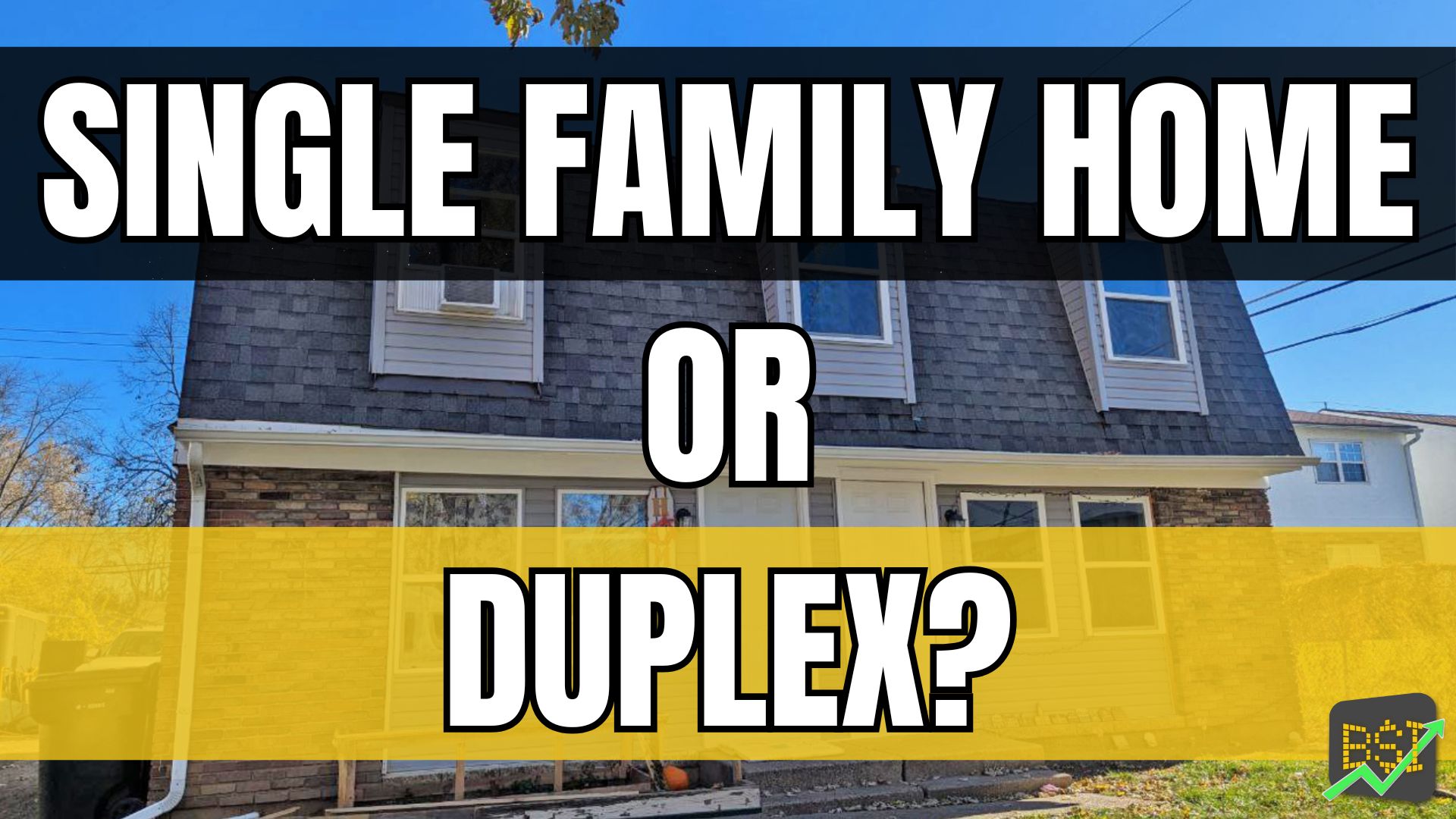
One of the most frequent questions we receive from new investors is: "Is a Single Family Home (SFH) or a Duplex better?"
The answer is often the one you least want to hear: It depends.
While that may sound like an anticlimax, the truth lies in the data, not in the generalizations often pushed by industry "gurus." To build a resilient rental portfolio, you need to look past the headlines and understand the operational reality of both asset classes.
Here is a breakdown of the myths, the realities, and the management strategies required to make multifamily properties successful.
The Common Myth: Stability vs. Turnover
The general wisdom in the real estate community is that Single Family Homes (SFHs) are the superior asset class. The argument is that SFHs attract families who stay longer, take better care of the lawn, and treat the property like their own.
Conversely, duplexes (and triplexes or fourplexes) are often labeled as "transient" housing with high turnover rates.
However, our portfolio data tells a different story.
We have analyzed our own rental units and found significant long-term stability within our small multifamily properties:
- Duplex A: Tenants have been in place since 2021.
- Duplex B: Tenants have occupied the units since 2022.
- Duplex C: We have a tenant who has been living there for 7 years and is still currently leasing.

This data dispels the myth that duplexes essentially equal high turnover. With the right asset in the right neighborhood, a duplex can offer stability comparable to a single-family home.
The Reality: Managing Shared Space
While the stability myth may be busted, it is important to be transparent about the operational nuances. Can a duplex create more headaches than a single-family home? Sometimes.
When you have two households living under one roof (or sharing a wall), you introduce a human dynamic that doesn't exist in SFHs. Here are real scenarios we have managed:
- Shared Utilities: If a water meter is shared between units, disputes can arise over who is using more water.
- Neighbor Disputes: We have handled complaints where one tenant accused the neighbor of throwing trash onto their side of the property.
These are real operational friction points.
The Appraisal Trap: Math vs. Emotion
If you are planning a cash-out refinance to recycle your capital, you need to be prepared for a potential appraisal hurdle with duplexes.
With a Single Family Home, your sales comparables are often emotional homeowners. These are people who fall in love with a specific neighborhood or a renovated kitchen and are willing to overpay just to secure their "dream home." That emotional premium drives up market values, which directly benefits your appraisal and allows you to pull more cash out.

But with a duplex, your neighborhood comps aren't families. They are calculating investors. Investors do not buy based on "vibes"; they buy based on ROI and the bottom line. Because professional investors rarely pay a cent above what the math justifies, an appraiser is likely to return a much more conservative number for a multifamily property.
However, a strategic investor does not throw their hands up in defeat. Instead, they ask: "How can we mitigate this?"
The Solution: Screening and Contracts
Managing a duplex successfully boils down to two critical pillars:
1. Rigorous Tenant Screening
You are not just placing a tenant; you are placing a neighbor. Screening for temperament and financial responsibility is crucial when tenants live in close proximity.
2. Clear Lease Terms
Ambiguity is the enemy of a peaceful landlord. If you place two petty tenants next to each other without clearly defined contractual responsibilities regarding noise, shared areas, and utilities, you are building a war zone.
By spelling out these expectations in the lease agreement, you protect your asset and your sanity.
Always remember to check sale comparisons in the area of like-kind properties before you run an appraisal, if the goal is to get the highest appraisal value.
Conclusion: The "Two-Engine" Cashflow Machine
Despite the potential for inter-tenant friction, the financial upside of a duplex is significant. A duplex effectively acts as a cashflow machine with two engines instead of one.
If one tenant moves out, you still have income from the second unit to cover your expenses. In a Single Family Home, a vacancy means 100% income loss for that period.
If managed right — with proper screening and solid contracts — a duplex can provide superior cashflow and risk mitigation compared to a single-family home.
Ready to learn how to buy U.S. properties from anywhere in the world? Check out our free introductory course on remote US real estate investing.
