

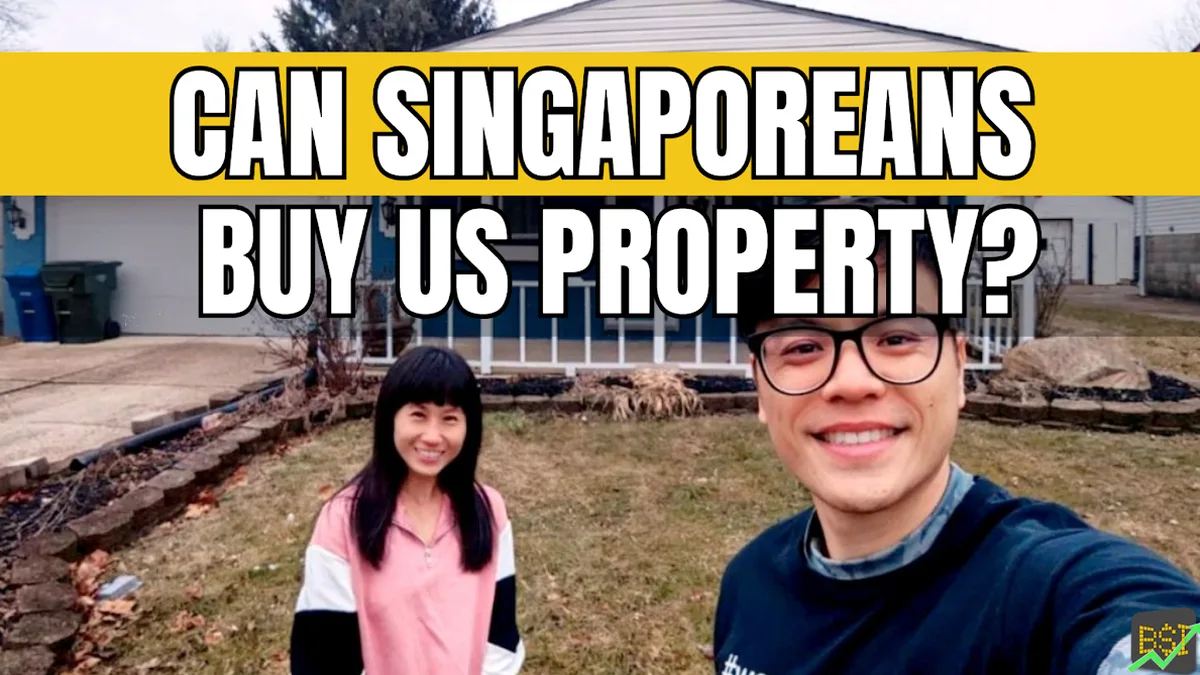
Yes. Singaporeans can legally buy US property for investment, own it outright (land included), and complete the whole purchase from Singapore without a visa, a US credit score or US income.
The US has no national rule against foreign buyers. A Singaporean can hold a US property in their own name or through a US company, obtain loan approval from US lenders based on the property's rent rather than personal income, and close the purchase online. What takes work is not the legal side, but the process: choosing a market, running the numbers and building a reliable team on the ground.
Can a foreigner legally own property in the US?
Yes. Foreigners can own 100% of a US property, freehold, with full legal title. There is no requirement to hold a green card, US citizenship or have a local partner.
Ownership can sit in two places:
- Your own name. No set-up fees, but restrictions on setting up a bank account remotely.
- A US limited liability company (LLC). A US company that holds the property and helps separate liability from your other assets. Note that this does not replace insurance nor act as a foolproof shield against liability. A business bank account for the LLC can be set up fully online. Though this involves a set-up fee, many investors prefer this structure.
There are two limits worth knowing. First, owning US property does not give you a right to live or work in the US. Second, a number of states have passed laws restricting land purchases by certain foreign buyers. According to law firm Mintz, about 36 states had such laws by the end of 2025. They mostly target buyers linked to countries such as China, Russia, Iran and North Korea, and mostly cover farmland, critical infrastructure or land near military bases. Rules vary by state, so check the state you are buying in.
How to buy US property from Singapore in 6 steps
The process below is how Tracy (the author) and her husband from Byte Sized Investments have done it across their US investment property portfolio. No step requires flying to the US.
Step 1: Choose the right US city
The US has 50 states and thousands of cities, and not all of them may be good as an investment. Investors commonly look for:
- Population growth. More people means more rental demand.
- A diverse, growing economy. Not a town that depends on one industry.
- A good rent-to-price ratio. Not simply cheap houses, but houses where the rent covers the mortgage and operating costs.
- Low natural disaster risk. Insurance tends to cost much more in disaster-prone states such as Florida, and even if insurance covers damages, a house that was struck down by natural disasters will not be earning you rent.
- Landlord-friendly laws. The factor foreigners miss most often. Different states do not treat landlords equally, and many tenant horror stories come from states with weak landlord protections, such as California and New York.
All of this can be researched online, especially with the help of AI agents today (always verify the sources when using AI). Sites such as Zillow.com and Google Street View let a buyer compare cities and "walk" a neighbourhood from Singapore.
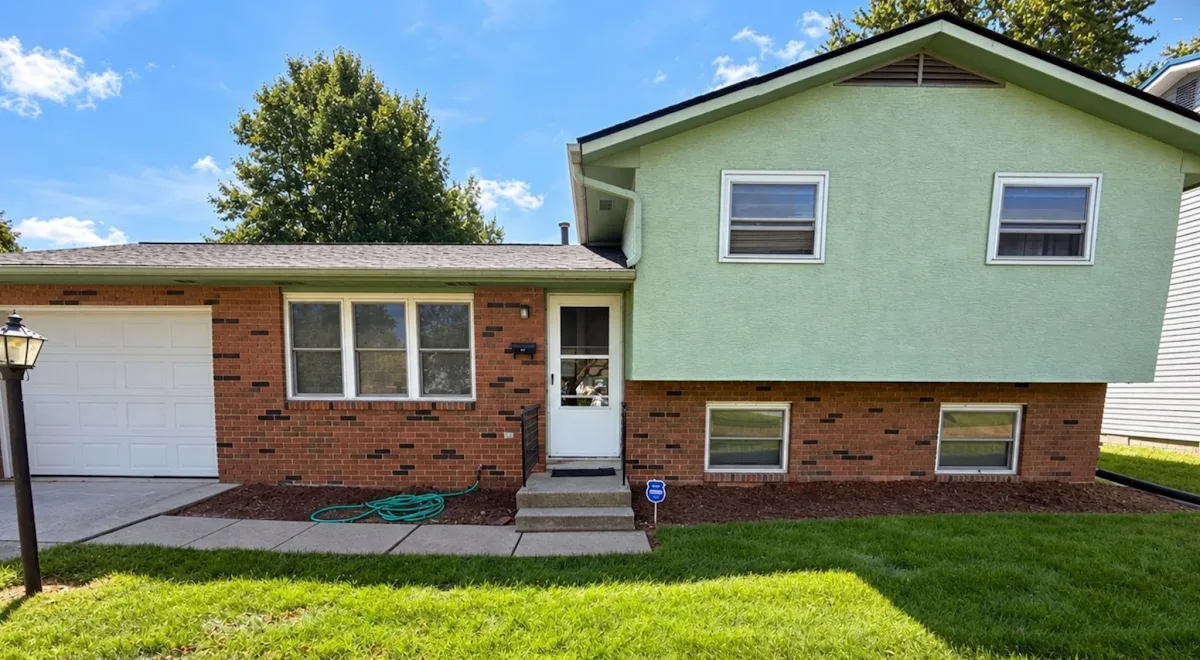
A US property that the author bought for US$175,000 in 2026 without a visit to the US.
Step 2: Run the numbers before you buy
A good asset should pay for itself, i.e. be cashflow positive. Cashflow is the money left each month after every expense is paid.
This is where many investors fall short. A property whose rent does not cover its mortgage is not passive income. It is negative cashflow.
Before making an offer, take the expected rent and subtract:
- The mortgage payment
- Property tax and insurance
- Property management fees
- An allowance for vacancy and repairs (varies based on market and home condition)
- Homeowners association fees, if any (similar to condo MCST fees in Singapore)
Also budget for miscellaneous costs: closing costs, loan fees, the inspection, and any rental registrations. These numbers vary a lot from city to city.
Step 3: Decide how to hold the property
You do not need a US company to buy, but many foreign investors hold US property through an LLC to keep claims arising from the property separate from their other assets. An LLC is not a guarantee of full protection, and it does not replace landlord insurance.
The LLC, its US tax ID and a US business bank account can all be set up online from Singapore. The right structure depends on your situation, so check with a qualified legal or tax professional before deciding.
Step 4: Build your team on the ground
You are not there but your team is. A remote buyer needs four key players:
- A real estate agent (called a realtor in the US). Instead of looking for the highest-earning one, look for one who accommodates to your remoteness, like difference in time zones, difference in remote closing processes, and difference in cultural expectations. They should also be responsive and point out defects, willing to negotiate the price down, even though that lowers their own commission.
- A property manager. Handles leasing, tenant screening, rent collection, maintenance and, if needed, evictions.
- A lender. Foreigners can borrow from US lenders (see the loans section below).
- Someone who has done it before. An experienced investor who has “been there done that” successfully, someone who can spot mistakes before they become expensive.
The team is built the same way you keep in touch with a friend overseas: by message and video call, with online reviews and testimonials to check each person.
Step 5: Make the purchase remotely
The question asked most often is how anyone can buy a house without seeing it. The sequence below is common for remote buyers:
- Live video walkthrough. Ask the realtor for a live call, not a pre-recorded video, and check every switch, tap, window, door, lock, plumbing, electricals, etc.
- Make an offer. The realtor prepares the sales and purchase contract, which you sign electronically. Once the seller signs, you are "in contract".
- Professional home inspection. An inspector checks everything, including the roof, attic, electrical grounding, carbon monoxide levels and more, then sends a detailed report with photos of every issue. It is usually far more thorough than an in-person viewing.
- Review the closing package. A title company, which plays a role similar to a conveyancing lawyer in Singapore, prepares the closing documents. The key one is the settlement statement, which shows the exact amount due at closing.
- Sign and wire. You sign and wire the funds to the title company, which pays the seller. For a loan, the lender would require the documents to be notarised, which foreigners usually do through a notary or the US embassy, you can read more in this loan guide.
Once both sides have signed and the funds are in, you own a US property.
Step 6: Manage the property after closing
Closing day is not the finish line. The purchase only works once rent starts coming in.
The property manager is your hands and legs on the ground, and you as the owner are the CEO. Ask for updates at key moments such as renovations and leasing. Approve larger expenses, read the monthly statements, and replace a manager who underperforms.
Renovations deserve extra care - Insist on photos, videos and a detailed scope of work, and pay labour in stages rather than upfront.
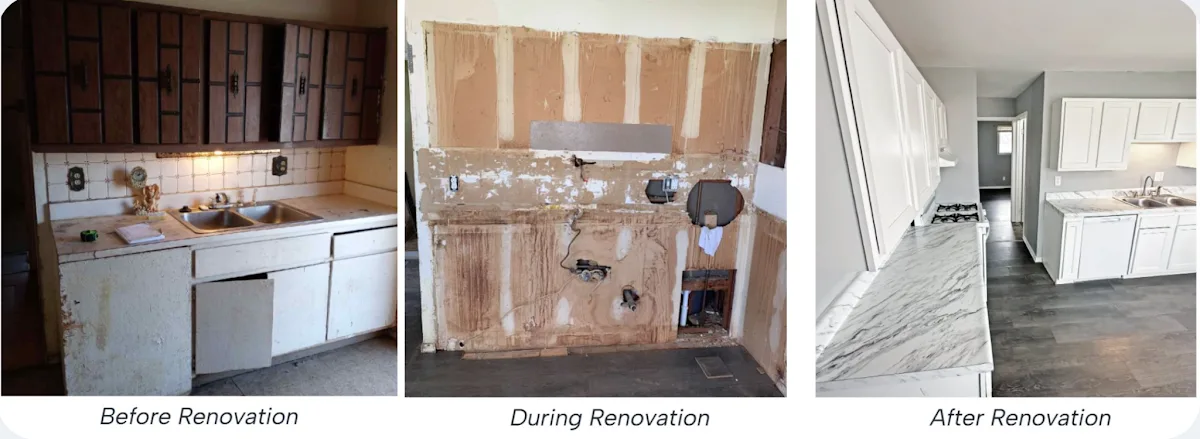
The kitchen of Byte Sized Investments’ first property before, during and after renovation, managed from Singapore.
Can Singaporeans get a US mortgage?
Yes. Foreigners commonly use a DSCR loan (debt service coverage ratio loan), which is approved on whether the property's rent covers the mortgage, property tax and insurance, not on your salary.
That means no US credit score, no US income, no age limit, and no TDSR test of the kind Singapore banks apply. As long as each property pays for itself, an investor can keep borrowing.
It is also worth noting that the US is one of the few places in the world where you can get a 30-year fixed-rate mortgage. Rates, down payments and terms differ between lenders, so compare several. More detail is in the FAQ on buying US property as a foreigner.
What taxes do Singaporeans pay on US property?
The main taxes are US tax on rental income, withholding when you sell, and US estate tax rules. Singapore generally does not tax the rent.
| Tax | How it works for a Singapore buyer |
|---|---|
| US tax on rent | Depending on company structure, an individual or LLC can be taxed on net income at graduated rates after deductions (IRS) |
| Singapore tax on the rent | Foreign-sourced income received in Singapore by resident individuals is generally exempt, except income received through a Singapore partnership (IRAS) |
| Selling (FIRPTA) | The buyer generally withholds 15% of the amount realised (broadly, the sale price) when a foreign person sells US property (IRS) |
| US estate tax | A non-resident's estate must file a US estate tax return if US assets, including real estate, exceed US$60,000 at death (IRS). Discuss with a qualified estate planning professional how the property could be held, for example through a properly structured trust, to reduce or avoid this tax for your heirs. |
Depreciation, a yearly deduction for the wear and tear of the building, can reduce taxable rental profit. How these rules apply depends on your structure and personal situation. This is general information, not tax advice, so speak to a CPA (a qualified US accountant) who works with foreign property owners.
Do you need to visit the US to buy a property?
No. Research, video walkthroughs, inspections, signing and closing can all be done remotely.
Many of the properties in the Byte Sized Investments portfolio were bought without being seen in person. A useful comparison: investors buy shares in Apple or Nvidia without flying to California to inspect the offices. They study the numbers and the people running the business. A rental property bought as an investment can be assessed the same way, with a realtor, an inspector and a property manager as the eyes on the ground.
The process is also explained in this video, How Singaporeans Can Buy US Rentals (100% Remotely).
Is buying US property from Singapore risky?
Every investment carries risk. Regardless of country, owning rental properties as an investment comes with similar risks:
- Vacancy and repairs, which is why the professional inspection is crucial to know what you are buying, and your numbers should include an allowance for both.
- Problem tenants. Screening matters. Make sure to communicate with your property manager on their tenant screening criteria.
- A weak property manager or contractor. Adopt an eyes on, hands off approach. Do not pay for renovations fully upfront, and fire fast if your manager is not performing.
- Currency fluctuations. Every overseas property investment will be subject to forex fluctuations. The USD is still a strong currency with most of the world’s reserves in USD.
Running the numbers before buying, ordering a professional inspection and actively overseeing the property manager reduce these risks. They do not remove them.
Summary
In summary, Singaporeans (and non-Americans) can own US property and access DSCR loans. The whole purchase and management process can also be handled remotely without flying to the US.
To start learning about US property investing, get the free 6-part course from Byte Sized Investments.